

How To Change Spotify Icon Windows 10
Cars have inverse a lot over the years, but 1 affair about them remains the same — people dear iconic makes and models. Each decade had its own versions of the auto that won out over the residuum, and many machine manufacturers improved upon previous designs to make new cars that much better and entice consumers. Every bit the decades went on, new designs, drive styles and torso types were introduced, only some have stood the test of time meliorate than others.
Contrivance Brothers Model 30, 1914
John and Horace Dodge became car-manufacture pioneers when they created Dodge Brothers Visitor in 1914. They grew up in an automotive family working at their begetter's shop, so they got off to a proficient get-go when it came to designing and producing cars.

The 2 went on to start the well-known Dodge make and subsequently introduced the Dodge Brothers Model 30. The classic sedan was the start 4-door vehicle with a steel roof. The sedan was the last car John Dodge owned before his decease in 1920.
Starting in the early years of the automobile, Chrysler made vehicles that were designed to be both reliable and stylish. In 1926, the company released the Majestic eighty, a auto that was meant to make a competitive marker on the car industry.
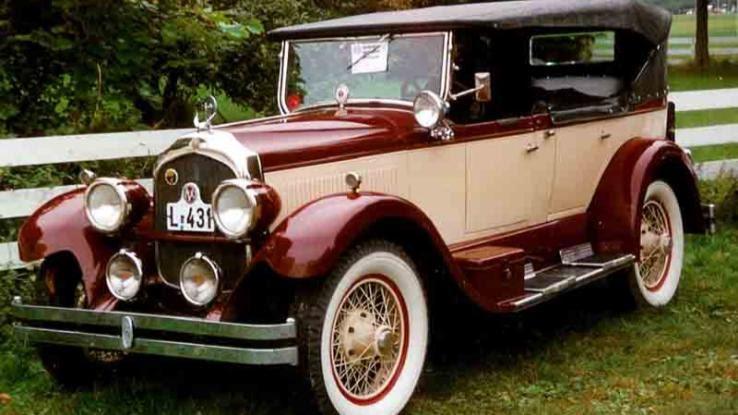
Luxury vehicles like those from Cadillac and Lincoln were pop at the time, only upon release of the Imperial 80, it was obvious that Chrysler had come to win. The machine had a six-cylinder engine that had 92 horsepower, and Chrysler was then confident that the Regal was worth buying that it offered a speed guarantee on the vehicle.
Lancia Lambda, 1923
Lancia is a car manufacturer based in Italy that's been around since 1906. The car company pioneered the sports tourer with its Lancia Lambda in 1923. The car was the offset to offer an independent front suspension organisation and a V4 engine.

Lambda was way ahead of its time in the auto-manufacturing business, offer avant-garde engineering for the weight of the car, the types of materials used and the construction formats that differed from the typical cars of the fourth dimension. Lancia became a part of the Fiat Group in 1969 and is now known as Lancia Automobiles.
Rolls Royce Phantom I, 1925
Rolls Royce has get synonymous with luxury and affluence over the years — and for good reason. The cars are generally sought subsequently by the rich and famous, and brides and grooms frequently utilize them as nuptials limousines. In 1925, Rolls Royce introduced the Phantom I, a replacement for its pop 40/50 Silver Ghost.

The Phantom I had a much improve engine than its predecessor at 7.seven liters and vi cylinders. It also had disc brakes, which were fairly new at the fourth dimension. Its elegant, modernistic blueprint was a welcomed upgrade from previous Rolls Royce models.
Bentley 8 Litre, 1930
Perhaps no car make is equally widely recognized for being a luxurious status symbol quite like a Bentley is. Dorsum in 1930, Bentley launched its very last car before Rolls Royce purchased the company: the Bentley 8 Litre.

The vehicle ran at 230 horsepower, and fifty-fifty with all the rich touches in its blueprint, information technology could hit speeds of over 100 miles an 60 minutes. The car was personally vouched for by W.O. Bentley himself when he told the public that the ride would be silent, fifty-fifty while running at top speeds.
Ford Roadster, 1932
The Ford Roadster was arguably the automobile that started the hot rod tendency among Americans and other car enthusiasts around the globe. The machine was the main player in speed and drag racing because of its V8 engine and accessibility that allowed mechanics to easily alter information technology.

The popularity of the machine can be attributed to its dandy racing abilities but also to its cheap price tag. It also had both five-window and iii-window suicide door options. The Embankment Boys' hit vocal "Little Deuce Coupe" helped secure its popularity nigh three decades afterward the first Roadster came off the line.
Pierce Argent Pointer, 1933
The futuristic await of the Pierce Silver Arrow was something people marveled at when it was released in 1933. It boasted enclosed fenders, and the swooping bodywork was dissimilar anything anyone had e'er seen in car production.

The unique car had a V12 engine, which was rare at the time, and could hit speeds of up to 115 miles per hr. At the time the car toll $ten,000, which, accounting for aggrandizement, would exist about $200,000 today. It's no wonder that only a few of the cars were ever produced.
Cadillac V16, 1938
In that location's a reason why people use the name Cadillac to draw something that's the all-time of the best. The car visitor started strong and has kept it up. Back in 1938, it introduced the powerful Cadillac V16, a beautiful and heavy auto that striking the pinnacle of popularity soon after its release.

The smooth ride that the V16 engine provided was one of the main draws when it came to purchasing a Cadillac back in the day. The company'south use of this engine lasted until the 1940s when it replaced that engine with a V8 on all Cadillac models.
Buick Century, 1941
The Buick Century was once i of America's well-nigh powerful vehicles to hit the road. The car could hit speeds of over 100 miles an hour — with a most comfortable cruise at fourscore miles an 60 minutes — and got power from an eight-cylinder engine with 165 horsepower.

Buick's make reputation, even today, owes the Century some gratitude. If it wasn't for this specific car, information technology's not sure that Buick would've ever been able to make operation one of its major selling points. The Century was released in a fleet with six other models.
Lincoln Continental, 1942
Lincoln'south production was put on hold during WWII, but that wasn't before information technology released the Continental with a slightly new pattern that included front-terminate sheetmetal. Most of the Lincolns released before the state of war didn't vary much from their predecessors, merely the Continental was incomparably different.
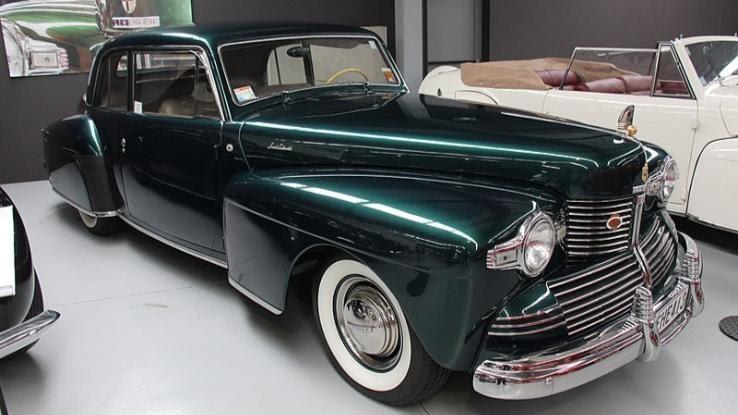
The V12 engine didn't surpass other powerful cars of the time, but with its 292-cubic-inch engine, it certain stood out. Manifestly fewer than 140 of these cars were ever made, so their rareness is something that helped secure their popularity.
Chevrolet Fleetmaster, 1947
Maybe one of the well-nigh recognizable cars on the list is the Chevrolet Fleetmaster. Although it didn't have much of a style change from the previous model, it did take some 1930s designs and update them a lilliputian bit to make this 1 of the most sought-after convertible cars of the decade.
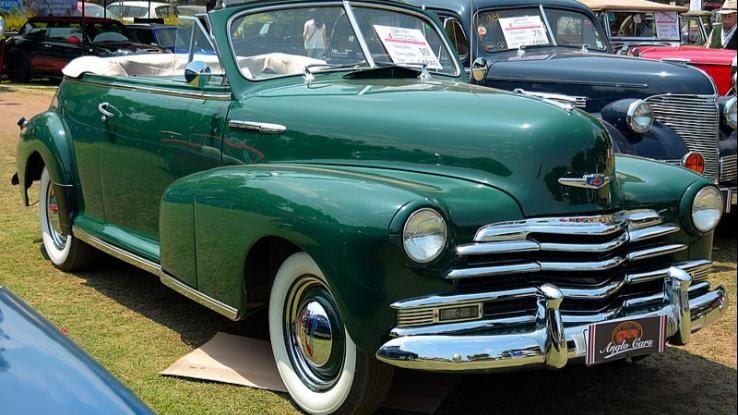
Over 600,000 Fleetmasters were sold in America in 1947, showing that they were on everybody's auto wish list that yr. Its classic looks and reliable engine made for a machine that offered both new excitement and familiar comfort.
Mercury 8, 1949
When the custom-motorcar culture of the '40s took over for car-heads beyond America, the Mercury viii was a top choice. The design and composition of the auto had drastically changed from its predecessor, which fabricated it that much more than desirable among car lovers.

The Mercury 8 offered a new flathead V8 but kept the same peaked hood and wicked fenders that information technology had in years prior. The auto was so popular that its fame still lives on today for hot rodders — some of whom spend upward of $50,000 but to update and change these vehicles.
Volkswagen Protrude, 1950
The 1950 Beetle was a vast comeback on the older versions of the classic car, which was released in the tardily 1930s, and the 1950 version saw a ascension in sales past over 100%. Over the years since its release, the Beetle has gone on to go one of the all-time-selling cars in history.

Volkswagen is at present 1 of the biggest automobile companies in the world, and for practiced reason. The reliable High german engineering and sleek and updated styles that it continues to release are merely a couple of the reasons why VWs are so pop.
Chevrolet Corvette, 1953
Even people who don't care much about cars know well-nigh the Chevy Corvette. The car has been pushed in pop culture and became a classic about instantly upon its release. This was the outset "sports car" in American-made history, and it became a staple on the roads in the U.Due south.

The 1953 version of the 'Vette had a half-dozen-cylinder engine with a soft meridian for those hot summer days. The side windows were actually detachable, and it was lightweight, fabricated of fiberglass. 1953 was the first yr of sales for this iconic car — and it only came in a colour chosen Polo White initially.
Chevrolet Bel Air, 1957
Even in the 1950s, this was a surefire contender for car enthusiasts everywhere. Saying information technology was a cute take on auto pattern even back and then was a complete understatement.

The fins on the 1957 Bel Air were the largest in Bel Air history, and the choice between convertible or sedan fabricated the car that much more desirable. The V8 engine was and then powerful that, had the term "musculus automobile" existed at the time, the Bel Air would've been the best muscle machine effectually.
Studebaker Avanti, 1962
The Studebaker Avanti is 1 of the rarer luxury coupes ever made. Fewer than 5,000 of the cars were manufactured, and the lifespan of the car was reportedly merely a twelvemonth. The Avanti was originally marketed to the public equally "the only 4-passenger high-operation personal car."

The Avanti's body was made of fiberglass, and the design was revered amid automobile enthusiasts. The machine's rubber rating was off the charts, and it offered high speeds with its 289 Hawk engine and supercharger.
Pontiac GTO, 1964
The '60s were the beginnings of the American muscle car, and the GTO kicked that era off with its high horsepower and pocket-sized body design. The V8 engine was one of the most powerful at the time. The car besides had hood scoops, even though they weren't functional initially.

With its firm interruption and custom tires, the GTO was a performance car that set the standard for others to follow. The way of the car was popular, of course, just the thrilling speed it offered had buyers waiting in line for their chance to drive one.
Porsche 911, 1965
Just about anything from Porsche is many a auto lover'south dream. This particular luxury model has been making waves since its conception. When the Porsche 911 was released, it was the start of the car company's long reign over the manufacture; the 911 ready a standard for racing.
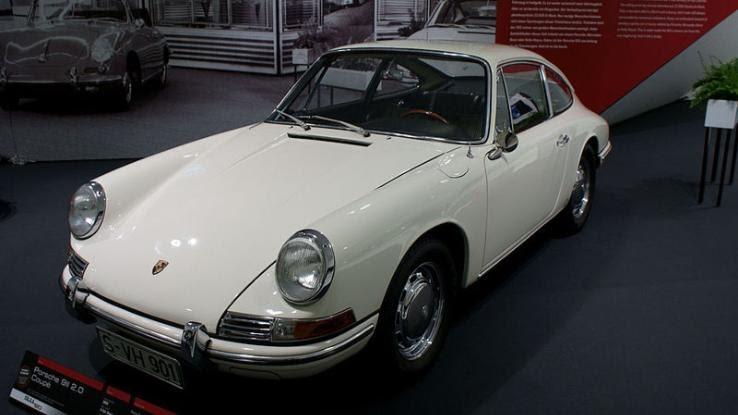
In the start, the flat engine wasn't all that impressive, but when the 911 was released, information technology came with a bigger, more powerful engine. This allowed Porsche to striking the market running and get enthusiasts interested in the stylish and fast racing powerhouse. New versions of the 911 have been released yearly since 1965.
Stutz Blackhawk, 1970
The Stutz Blackhawk was the perfect example of 1970s style. The Italian car was produced on an American chassis, and it was the epitome of luxury, costing buyers upward of $xxx,000 for the cheapest option. With aggrandizement, that would be over $200,000 today. Only about 600 of the cars were ever made.
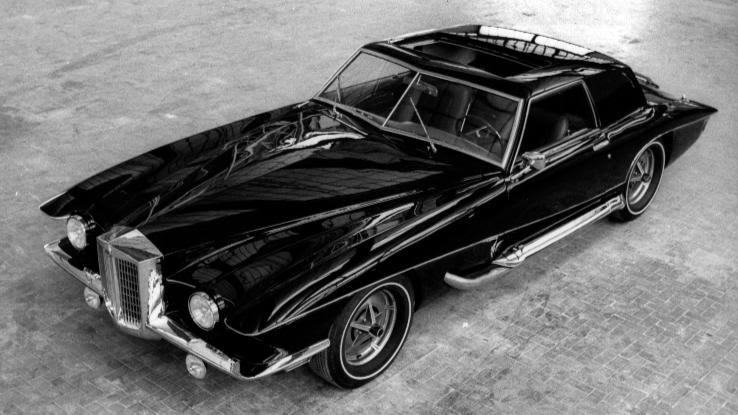
The Stutz Blackhawk was a famous-people motorcar, and owners included Johnny Cash and Elvis. The absurd factor of the motorcar coupled with its hefty cost tag gave the vehicle its infamy, and it soon became a status symbol for anyone who could afford it.
Ford Ranchero, 1972
The Ford Ranchero was the 1970s' version of a lovechild between the pick-upward truck and the sporty sedan. The choice-up cars were made to haul and cruise, and people loved the way they drove, along with their appearance, at the time.

The Ranchero ran on a V8 engine, and then it got a good amount of power for its solar day. The 1972 version wasn't the kickoff ever made, but it was the most popular because of its design and cargo-carrying capabilities. It was the perfect combination of a pick-upwards truck, stylish sedan and station wagon.
Pontiac Trans Am, 1977
The Pontiac Trans Am ruled the 1970s when information technology came out. Pop culture took the auto and ran with it. The car was featured in the moving-picture show Smokey and the Bandit, making it more famous than it already was. The forepart decal of a "screaming craven" fabricated information technology a standout on the route.

The Trans Am ran on a 6.vi-liter V8 engine with an selection that offered 200 horsepower. The treatment of the Trans Am was top notch, and it rivaled its competition, winning over the hearts of every muscle machine lover in the United States.
DeLorean, 1981
Everyone who'due south anyone will recognize the DeLorean as the fast, time-traveling car from the hit motion-picture show Dorsum to the Hereafter. The butterfly doors, the cool boxy mode and the fact that information technology could time-travel (in the film) made the motorcar an iconic '80s staple.

Before it was in the movie, the DeLorean had a difficult time making a name for itself among tough competitors such equally Ferrari and Porsche. With an engine with only 130 horsepower, there's a reason it didn't friction match faster cars of the fourth dimension. It'due south however the famous DeLorean, though.
Volkswagen GTI, 1983
Another Volkswagen on the list is the GTI, the get-go hatchback made to be a sporty culling to common 4-door automobiles of the time. The car was cheap for its day, costing buyers less than $x,000. That fabricated buying of the cool compact easy and affordable.
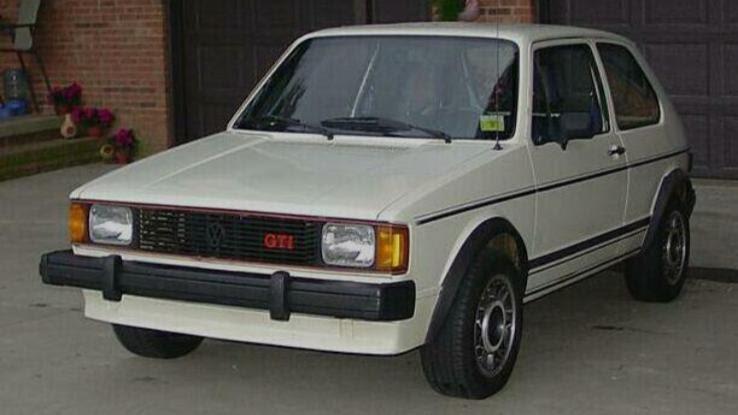
The GTI besides offered upgrades from its predecessor, the Rabbit, such as business firm suspension and bigger tires. Information technology only had 90 horsepower, simply its speed wasn't an issue because of its pocket-size size. Its atomic proportions were something new back when it was released, and people loved the GTI's new style.
Ferrari Testarossa, 1985
Another iconic automobile that was made famous by popular culture, the Ferrari Testarossa was featured in the hit Television bear witness Miami Vice. The avant-garde vehicle was and so far alee of its fourth dimension that information technology was well-nigh incommunicable to believe Ferrari had achieved such a feat.
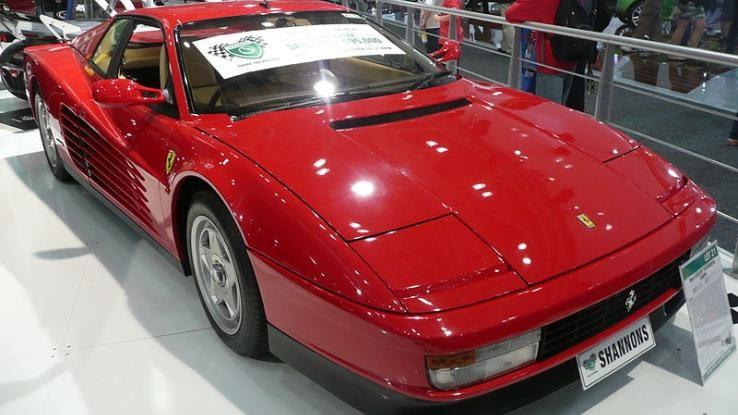
The automobile ran on a 12-cylinder engine and it was a speedster, reaching 60 in fewer than 6 seconds. The speed mixed with its unique mode made information technology an icon waiting to happen.
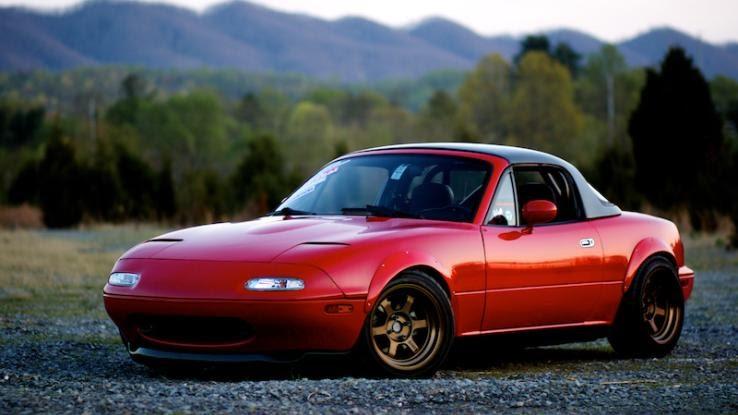
Mazda Miata, 1990
Taking a page out of the archetype European roaster's book, the Mazda Miata showed up in 1990 with a truly unique look and feel. The handling of the car was top-notch when it was released, and at under $fourteen,000, it wasn't too expensive for the everyday commuter.

Later on its release, it became the top choice in cars for racing enthusiasts because of its lightweight body and speed abilities. The Miata was so well made and so unique that it'southward arguably still in its own class.
Porsche Boxster, 1997
The inspiration for this car's design came from the 550 Spyder, and it measured upwardly nicely. It was designed to introduce to people the idea of driving a sports car without having to go full speedster.

The Boxster had 201 horsepower, which gave it the desired speed needed to zip effectually tracks or country roads. In 2006, a hardtop version of the Boxster called the Cayman was introduced, and it took the vehicle'south classic style and made it new all over over again.
Pontiac Aztek, 2000
The Pontiac Aztek might non be the coolest auto on the list, but that doesn't brand it any less iconic. The crossover was supposed to be a shining light in the earth of SUVs, but it only didn't hitting the marking. People didn't like its looks or driving abilities.

It ran on a measly 185 horsepower — way too minor for its size. People didn't love the drivability of the Aztek, and they hated the way it looked even more than. Regardless of its lack of success, the Aztek yet remains a highly recognizable crossover today because of its blueprint.
Audi R8, 2006
Audis are typically marketed as high-end, luxurious sports cars, and the Audi R8 was no different. Its predecessor didn't impress because it resembled a VW Golf more than anything else. Simply with the R8, the manufacturers decided to use a chassis that was more in line with a Lamborghini.

The V8 engine ran on a whopping 420 horsepower, which made the "supercar" more fun to bulldoze than a lot of its competitors. Information technology became both a leisure sports car and a daily driver because not only was information technology fast and powerful, only it was also a dream to maneuver.
Tesla Model S, 2012
When the Tesla Model S arrived on the scene, it was the first automobile made without inspiration from whatever other motorcar that came earlier it. This electric car was unique in almost every aspect, and the way fabricated all other electric cars await, well, pretty dull.

The driving range of the Model Southward made information technology possible for owners to hit the route much longer in this automobile, getting effectually 265 miles on a single accuse. The Model Southward inverse the electric-vehicle game and offered high-tech options that other cars just didn't have.
Tesla Model 3, 2018
Tesla is really making a name for itself in the electric-vehicle industry, and the Tesla Model 3 is a perfect case of an icon of the road. The sport sedan offers a 300-mile range on a unmarried charge — at an affordable price tag to boot.

Handling on the sports automobile is amazing, taking only a few seconds to attain 60-mile-an-hour speeds. The initial release saw only 2,000 Model 3s built, so their exclusivity matched that of Tesla's previous models, but increasing production in recent years has fabricated more than of these cars readily available.
Source: https://www.life123.com/article/the-most-iconic-cars-ever-made?utm_content=params%3Ao%3D740009%26ad%3DdirN%26qo%3DserpIndex
Posted by: diazcipen1977.blogspot.com
0 Response to "How To Change Spotify Icon Windows 10"
Post a Comment